Marine vessels operate in some of the harshest conditions for metal equipment. Saltwater, humidity, fluctuating temperatures and constant exposure to moisture can accelerate corrosion and degrade protective coatings on ship hulls, ballast tanks and other steel structures. Without proper maintenance, these conditions can contribute to premature material deterioration, costly repairs and reduced service life.
Abrasive blasting is an essential part of marine maintenance because it removes corrosion, old coatings and accumulated contaminants while preparing metal surfaces for new protective finishes. From commercial ships and offshore structures to port infrastructure, marine operators rely on effective surface preparation to maintain equipment and protect critical assets.
Understanding how abrasive blasting works, where it is used and which equipment best suits each application can help marine maintenance teams improve productivity, achieve consistent surface preparation and support long-term corrosion control.
Why Abrasive Blasting Matters in Marine Maintenance
Saltwater exposure presents an ongoing challenge for marine operators. Salt deposits and moisture can contribute to corrosion, while damaged or deteriorating coatings leave underlying metal more vulnerable to environmental conditions. Routine inspections and maintenance help identify these problems, but restoring a surface often requires more than washing away visible buildup.
Abrasive blasting propels abrasive media against a surface using compressed air, removing unwanted material and creating a surface profile appropriate for the specified coating system. When performed according to project requirements, this process helps establish the conditions needed for protective coatings to adhere properly.
Marine abrasive blasting is commonly used to:
- Remove rust, corrosion products and deteriorated coatings from steel hulls.
- Prepare underwater hull surfaces for recoating during scheduled maintenance.
- Clean ballast tanks and other internal compartments before inspection and coating work.
- Prepare structural steel on docks, offshore platforms and marine equipment.
- Restore metal surfaces before repairs, fabrication or protective treatment.
Effective surface preparation is particularly important in marine environments because coating failure can expose steel to persistent moisture and corrosive contaminants. Blasting helps maintenance crews establish a clean, properly prepared surface before applying a compatible coating system.
How Marine Operators Use Abrasive Blasting
Hull Preparation and Protective Coating Renewal
A vessel’s hull is continually exposed to water, making corrosion prevention and coating maintenance important parts of its upkeep. Over time, protective coatings can deteriorate, blister or become damaged by impact and routine operations. Corrosion may also develop where coatings have failed or metal has become exposed.
During dry-docking or other planned maintenance periods, crews may use abrasive blasting to remove deteriorated coatings and corrosion from designated hull areas. The process prepares the substrate for inspection, repair and the application of replacement coatings.
Hull blasting operations typically involve several steps:
- Inspecting the hull to identify coating failure, corrosion and areas requiring repair.
- Selecting an appropriate abrasive and blasting method based on the substrate and coating specifications.
- Removing existing coatings and corrosion to the required surface preparation standard.
- Inspecting the prepared surface for cleanliness, profile and remaining defects.
- Applying the specified coating within the required environmental and recoat conditions.
Not every hull requires complete coating removal. Depending on the vessel’s condition and the maintenance specification, crews may focus on localized repairs or selected areas. Matching the blasting process to the job helps avoid unnecessary work while maintaining the required preparation quality.
Ballast Tank and Internal Compartment Maintenance
Ballast tanks help vessels manage stability and draft, but their operating conditions can make corrosion control particularly demanding. Depending on the vessel and tank design, internal steel surfaces may encounter seawater, condensation, changing moisture levels and difficult-to-access areas.
Abrasive blasting is used to remove failed coatings and corrosion from tank interiors before inspection, repair and recoating. Proper preparation is especially important in confined compartments, where incomplete cleaning or missed areas can compromise the performance of a replacement coating.
Tank maintenance crews must account for more than blasting productivity. Confined-space entry procedures, atmospheric testing, ventilation, lighting, containment and abrasive removal all influence how work is planned and performed.
Before blasting begins, operators should establish procedures for safely accessing the compartment, controlling exposure to dust and spent abrasive, and verifying that the prepared surface meets the coating manufacturer’s and project specification requirements.
Offshore Structures, Docks and Marine Equipment
Ships are not the only assets exposed to salt-driven corrosion. Offshore platforms, loading equipment, piers, dock structures and other waterfront infrastructure also require periodic surface preparation and coating maintenance.
Abrasive blasting can remove corrosion and old coatings from structural steel, supports, brackets, fabricated components and equipment housings. These applications may involve large surface areas, elevated work locations or restricted access, making equipment configuration and reliable abrasive delivery important considerations.
For marine contractors, the right blasting setup can help crews maintain steady production while moving between different work areas. Portable systems may suit smaller or localized jobs, while bulk equipment can support larger projects with sustained abrasive demand.
Schmidt Manufacturing’s marine blasting solutions are designed for demanding environments that include shipyard maintenance, ballast and tank areas, port infrastructure and offshore applications.
Choosing the Right Abrasive Blasting Method for Marine Work
The appropriate blasting method depends on the condition of the surface, the coating system, the surrounding environment and the project’s operational requirements. Marine maintenance teams must balance cleaning performance with abrasive consumption, containment needs, access restrictions and production schedules.
Dry Abrasive Blasting
Dry blasting uses compressed air to propel abrasive media against a surface without introducing water into the blasting stream. It is commonly used for removing stubborn corrosion, preparing steel for coatings and achieving specified surface profiles.
Dry blasting can be a practical choice when crews need strong cleaning performance and precise control over surface preparation. However, airborne dust, spent abrasive and removed coating material must be managed through appropriate containment, ventilation and cleanup procedures.
Operators should also account for humidity, condensation and the possibility of flash rust after cleaning. Prepared steel must be protected and coated according to the project’s environmental limits and coating requirements.
Wet Abrasive Blasting
Wet abrasive blasting introduces water into the blasting process to help suppress airborne dust. This approach can be useful in marine maintenance where dust containment is a major concern or where surrounding operations place restrictions on airborne particulate matter.
Wet blasting still requires effective management of wastewater, spent abrasive and removed coatings. The presence of water also makes it important to assess drying requirements, surface condition and flash rust potential before applying a protective coating.
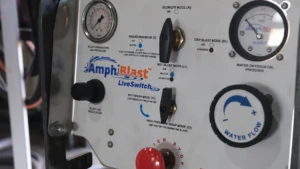
For operations that need flexibility, Schmidt’s AmphiBlast systems support both wet and dry blasting. Operators can adjust air, abrasive and water flow to suit the application, helping them transition between blasting methods without changing to an entirely separate machine.
The best approach depends on the surface preparation specification, site restrictions and coating manufacturer’s requirements. Wet blasting is not automatically suitable for every hull or tank project, just as dry blasting is not always the most practical option.
Selecting Abrasive Blasting Equipment for Marine Applications
Equipment selection affects productivity, abrasive consumption and the consistency of surface preparation. A system that performs well for localized hull repairs may not be the best fit for blasting large vessel sections or extensive tank interiors.
Marine contractors should evaluate several factors before choosing a blasting system.
Blast Pot Capacity and Compressed Air Supply
Blast pot capacity influences how long crews can work before replenishing abrasive, while the compressor must supply sufficient air for the selected nozzle and operating pressure. These factors should be considered together rather than treating vessel size as the only indicator of performance.
An undersized setup can cause interruptions, while a larger system may add unnecessary cost if the available air supply cannot support its intended output.
Schmidt’s abrasive blaster selection guide explains how air supply, abrasive choice and operating duration influence equipment sizing.
Abrasive Metering and Consistent Output
Consistent abrasive flow helps operators maintain predictable cleaning performance across large and complex surfaces. Poorly controlled media delivery can lead to unnecessary abrasive consumption, uneven preparation and additional labor.
Precision metering is particularly valuable during extended blasting operations, where crews need to maintain repeatable results across multiple work areas.
When evaluating equipment, marine contractors should consider how effectively the system controls abrasive flow, how easily operators can adjust settings and how frequently routine maintenance interrupts production.
Portable Systems and Bulk Blasting Equipment
Different marine projects require different levels of blasting capacity.
- Portable blast pots can support localized corrosion removal, smaller components and maintenance tasks that require frequent movement around a vessel or facility.
- Larger-capacity systems can reduce refill frequency during extensive hull preparation and other demanding projects.
- Bulk blasting systems can support high-volume operations where multiple work areas or nozzles require a sustained abrasive supply.
- Wet and dry blasting systems can provide additional flexibility when environmental conditions or project specifications vary.
Schmidt offers a range of abrasive blasting equipment for industrial applications, allowing contractors to evaluate available configurations based on their specific production needs.
Improving Safety and Efficiency During Marine Blasting
Marine blasting often takes place in challenging work environments. Shipyards may have multiple trades operating simultaneously, while tank interiors introduce confined-space hazards and offshore projects can involve restricted access and changing weather conditions.
Effective planning helps reduce unnecessary interruptions while protecting workers and surrounding equipment.
Establishing Safe Work Areas
Before blasting begins, crews should identify hazards associated with compressed air, flying abrasive, removed coatings, noise and restricted access. Appropriate respiratory protection, protective clothing, hearing protection and other personal protective equipment must be selected according to the hazards and applicable regulations.
Additional precautions may include:
- Establishing containment to prevent abrasive and coating debris from spreading.
- Verifying ventilation and atmospheric conditions before and during confined-space work.
- Inspecting blast hoses, connections, valves and remote controls before operation.
- Following equipment-specific procedures for pressurization, shutdown and maintenance.
- Collecting and handling spent abrasive and removed coatings in accordance with applicable waste requirements.
Schmidt provides additional guidance through its abrasive blasting safety information. Operators should follow equipment manuals, site-specific safety procedures and applicable occupational safety requirements throughout the project.
Reducing Downtime and Material Waste
Abrasive, labor and disposal costs can represent significant portions of a blasting project’s operating expenses. Improving productivity therefore involves more than increasing the speed at which media reaches the surface.
Crews can improve operational efficiency by matching blast pot capacity to the work, maintaining adequate compressed air, inspecting wear components and selecting abrasive media suited to the required surface preparation.
Accurate metering and reliable controls also help operators maintain consistent performance without making unnecessary adjustments throughout the shift.
Preventive maintenance is equally important. Worn nozzles, leaking connections, damaged hoses and malfunctioning valves can affect abrasive delivery and increase operating costs. Routine inspections help identify these issues before they lead to extended downtime.
Maintaining Marine Assets With the Right Blasting Strategy
Abrasive blasting plays an important role in preserving vessel hulls, ballast tanks, offshore structures and other marine assets exposed to corrosive environments. By removing deteriorated coatings and corrosion while preparing surfaces for replacement finishes, blasting supports maintenance programs designed to protect steel and extend equipment service life.
Achieving consistent results requires more than selecting a powerful machine. Marine operators must account for surface condition, coating requirements, abrasive selection, compressed air capacity, environmental controls and worker safety.
Schmidt Manufacturing provides abrasive blasting solutions for demanding industrial and marine applications, including systems designed for wet and dry blasting, portable maintenance work and high-production operations. Choosing equipment that matches the job helps contractors maintain dependable output, manage operating costs and prepare surfaces to the required standard.
To evaluate the right setup for your next marine maintenance project, explore Schmidt’s marine blasting solutions or contact the team to discuss your application’s equipment requirements.