Pick the wrong blasting and you will have to pay in dust complaints, flash rust, cleanup costs, or a substrate you damaged. Choosing between wet and dry blasting depends on more than whether you can use water on-site.
For some applications, dry blasting remains the most straightforward and productive approach. For others, adding water can make the job easier to control, particularly when dust suppression or surface heat is a concern. The right choice depends on the material being blasted, the work environment and the results the project requires.
Modern blasting equipment can also eliminate the need to choose one method for every job. Schmidt’s AmphiBlast system, for example, is designed to switch between wet and dry blasting while maintaining control over air, abrasive and water flow.
What Is the Difference Between Wet Blasting and Dry Blasting?
The basic distinction is straightforward.
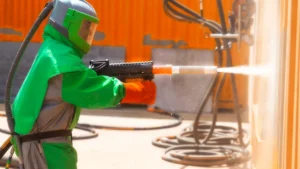
Dry blasting uses compressed air to propel abrasive media against the surface without adding water to the blast stream. It is a widely used approach for removing coatings, corrosion, scale and other unwanted materials when dust and site conditions can be managed.
Wet blasting introduces water into the blast stream. The water helps suppress airborne dust and can reduce the amount of surface heat generated during blasting. Schmidt describes wet blasting as a method that can reduce dust and surface heat while still providing abrasive cleaning and surface preparation.
The difference becomes more important when evaluating the conditions surrounding the job rather than simply the surface itself.
Dry Blasting at a Glance
Dry blasting can be a strong choice when:
- Maximum production speed is a priority
- Water cannot be used around the work area
- The substrate or surrounding equipment must remain dry
- The job is taking place in a controlled blasting environment
- Dust can be managed through containment, ventilation or recovery equipment
- Post-blasting drying would create an unnecessary step
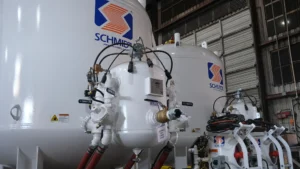
Dry blasting is also familiar to most abrasive blasting crews and can accommodate a wide range of abrasive media. Schmidt’s M-Series multi-media blasters, for example, are designed to work with virtually any abrasive media, from fine abrasives such as sodium bicarbonate to steel grit.
Wet Blasting at a Glance
Wet blasting may be advantageous when:
- Airborne dust needs to be reduced
- Surface heat needs to be controlled
- The surrounding environment places restrictions on dust
- A project requires more control over dust generated during abrasive blasting
- The application benefits from a combination of abrasive cleaning and water
Wet abrasive blasting equipment can introduce another variable into the process, however. Water consumption, drainage, drying and potential flash rusting all need to be considered before selecting the method.
Dust Control Can Change the Equation
One of the biggest reasons contractors consider wet blasting is dust control.
Dry abrasive blasting can generate significant airborne dust depending on the abrasive, coating, substrate and operating conditions. Containment and dust collection can address many of these concerns, but those systems may not be practical for every job site.
Wet blasting uses water to suppress dust at the point where abrasive impacts the surface. That can make it a useful option when reducing airborne particulates is a major concern.
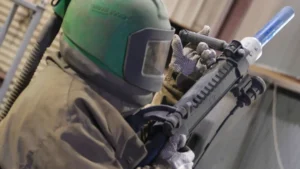
That does not mean wet blasting eliminates the need for proper site controls or personal protective equipment. Blasting operations still require appropriate safety procedures, equipment and job-specific controls. Schmidt provides safety information and documentation to help operators understand the materials and equipment being used.
For additional information, review Schmidt’s Safety Data resources before beginning a project.
When Dry Blasting Makes More Sense
Dust is not the only consideration. Sometimes introducing water creates problems of its own.
If the blasted surface needs to remain dry, wet blasting may add unnecessary work. Water can also create concerns around flash rusting on susceptible metals. Schmidt notes that moisture is a major concern for blasting productivity because wet compressed air can contribute to flash rusting, damp abrasive and control-valve problems.
For dry blasting projects, proper air treatment is therefore important. Moisture separators, aftercoolers and air dryers can help provide the dry compressed air needed for consistent blasting performance.
Surface Heat and Sensitive Applications
Another important difference between wet blasting and dry blasting is surface temperature.
The impact of abrasive against a surface generates heat. Depending on the material, coating and blasting conditions, excessive heat can become a concern. Wet blasting can help control that heat by introducing water into the blast stream.
This can be especially useful when the project involves a substrate or coating that is sensitive to heat.
The goal is not simply to blast as aggressively as possible. Effective surface preparation requires enough energy to achieve the desired result without creating unnecessary problems for the substrate.
Consider the Surface Before Choosing the Method
Before selecting wet or dry blasting, consider:
- What material is being cleaned?
- What coating or contamination is being removed?
- Is the substrate sensitive to heat?
- Can the surface be exposed to water?
- How quickly does the surface need to dry?
- Is flash rusting a concern?
- What level of dust control is required?
- What abrasive media will be used?
These questions can often narrow the choice before equipment selection even begins.
Site Restrictions Matter
The same blasting method can be ideal for one job and impractical for another.
A large industrial site with appropriate containment may have plenty of room for dry blasting equipment and dust collection. A more restrictive site may have greater concerns about airborne dust reaching nearby workers, equipment or occupied areas.
Wet blasting can help address some of those concerns, but water management then becomes part of the job.
Before choosing a method, look beyond the blasting pot and nozzle. Consider the entire work area.
Ask These Questions About the Job Site
- Is the area enclosed or open?
- Are other workers operating nearby?
- Are there sensitive pieces of equipment in the area?
- Can dust escape from the work zone?
- Is there adequate ventilation?
- Where will used water go?
- How will the surface be dried?
- Are there environmental or site-specific restrictions?
The best blasting method is often the one that fits the entire job, not simply the one that provides the highest blasting pressure.
What About Abrasive Media?
The choice of media can also influence the decision between wet and dry blasting.
Different abrasives have different characteristics, including hardness, particle size, density and recyclability. Some applications call for aggressive media capable of removing tough coatings, while others require a gentler abrasive to clean without unnecessarily affecting the substrate.
Schmidt’s Multi-Media Blasters are designed for applications using a broad range of abrasive media. The M-Series can accommodate materials ranging from fine abrasives to steel grit, with metering systems designed to provide controlled abrasive flow.
This flexibility can be valuable for contractors who regularly encounter different substrates and coatings.
Why a Dual-Mode System Can Be Useful
For contractors who handle a variety of applications, having separate equipment for every blasting method is not always practical.
A dual-purpose system provides another option. Instead of committing an entire blasting setup to wet or dry operation, a system can be configured to support both approaches.
The Schmidt AmphiBlast™ is designed specifically around this concept. It injects water into the blast stream after the abrasive metering valve, allowing the operator to control air, abrasive and water independently. The system can switch between wet blast, dry blast, blowoff and Softwash™ modes without requiring the operator to reset the primary blasting settings.
That flexibility can be particularly useful for contractors working across different environments and surface preparation requirements.
Wet or Dry Does Not Have to Be an Either-Or Decision
A project may begin as a dry blasting application and reveal a need for additional dust control. Another job may require dry blasting in one area and wet blasting in another.
A dual-mode system can provide flexibility when job conditions change.
Schmidt’s AmphiBlast systems are built around that idea, with configurations that can support wet and dry blasting and, depending on the system, multiple outlets. The AmphiBlast product line includes systems designed for different production and mobility requirements.
Wet Blasting vs. Dry Blasting: A Quick Comparison
| Consideration | Dry Blasting | Wet Blasting |
| Dust control | Requires containment or dust-control equipment | Water helps suppress airborne dust |
| Surface heat | Can be higher depending on application | Water can help reduce surface heat |
| Water management | Not required | Must be considered |
| Drying | No drying required | Surface may require drying |
| Flash rust concerns | Lower from the blasting process itself | Water can increase concern on susceptible metals |
| Site restrictions | May require stronger containment | Can help where airborne dust is a concern |
| Media flexibility | Broad range of media available | Depends on equipment and application |
| Equipment flexibility | Dedicated dry blasting setup | Dedicated wet or dual-mode setup |
There is no universal winner. The right method depends on the balance between productivity, dust control, surface requirements, site conditions and cleanup.
Choosing the Right Method for Your Application
If the project is straightforward, the decision may be relatively easy. Dry blasting can be an efficient choice when water is undesirable and dust can be adequately controlled.
Wet blasting becomes more attractive when dust suppression or surface heat is a major consideration. It can provide another way to manage the conditions created during abrasive blasting, particularly on projects where airborne dust needs to be minimized.
For contractors who regularly encounter both types of applications, a dual-purpose system may offer the greatest flexibility.
The important thing is to evaluate the entire blasting process rather than focusing only on whether water is present. Air supply, abrasive selection, blasting pressure, surface condition, dust control, site restrictions and cleanup all contribute to the final result.
Match the Equipment to the Job
Equipment selection should follow the application, not the other way around.
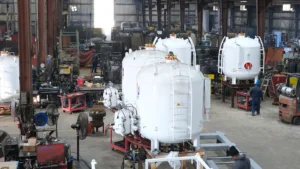
A small project with limited production requirements may call for a compact system. Larger industrial applications may require greater vessel capacity, higher production capability or multiple outlets. Schmidt offers blasting systems ranging from smaller multi-media units to larger production systems designed for demanding industrial environments.
The same principle applies to wet and dry blasting. If the work regularly changes from one environment to another, flexibility can become just as important as raw production capacity.
Closing Out the Blast: Choosing With the Whole Job in Mind
Wet blasting and dry blasting are not competing technologies so much as different approaches for different conditions.
Dry blasting remains a practical choice when water is undesirable and dust can be controlled through the work environment and equipment. Wet blasting can provide meaningful advantages when dust suppression and surface heat are important considerations. And for contractors who need both capabilities, dual-mode equipment can provide a way to adapt without maintaining completely separate blasting systems.
The best choice starts with the job itself. Consider the substrate, coating, abrasive, air supply, site restrictions, dust requirements and cleanup process before deciding how to blast.
When those factors are evaluated together, choosing between wet blasting and dry blasting becomes less about picking a favorite method and more about selecting the right tool for the work.